
Creator marketplace: how brands find and hire creators at scale
Sourcing creators manually is slow. Cold DMs go unanswered. Spreadsheets break down at 10 creators and collapse entirely at 50. If you already know you need influencer campaigns at scale, the real question is not whether to use a creator marketplace. It is how to use one well, and what to look for before you commit budget.
What a creator marketplace actually is
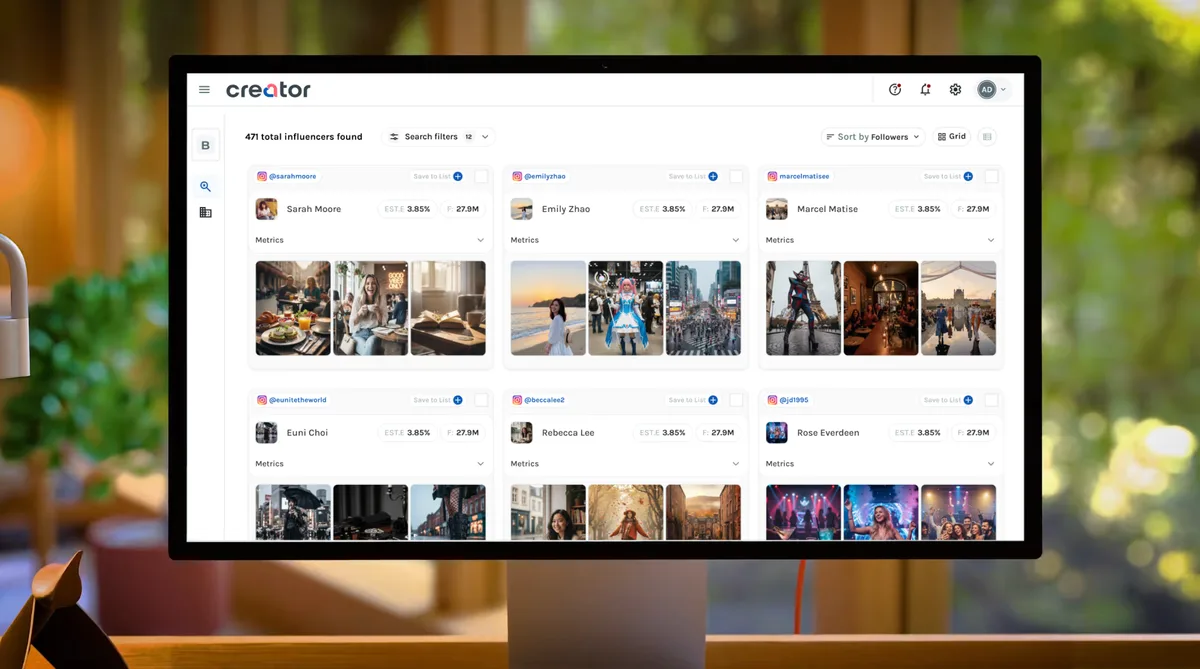
A creator marketplace is a searchable network where brands find, vet, and hire creators in one place. Instead of sourcing creators one by one across multiple platforms, a brand runs a single search and gets a filtered shortlist in minutes.
Every marketplace does three jobs: discovery (find creators), evaluation (vet them before spending), and activation (hire and manage the campaign). Weak tools do one of these well. Strong ones do all three. This article is about doing all three at scale.
Creator.co gives brands access to 270,000 registered influencers and a broader influencer marketing database of 400 million creators for discovery. That scale matters when you need to fill 50 campaign slots, not just 5.
How brands find creators at scale
Search filters are what separate a creator marketplace from a contact list. Useful filters include niche, location, follower tier, engagement rate, and audience demographics. Apply three filters together and a database of 400 million profiles narrows to a workable shortlist in minutes.
Filtering by niche is where fit matters most. See what this looks like in a real vertical: our report of AI-vetted beauty creators shows how brands find the right creators by content fit, not follower count.
Geo-search is one of the most underused filters for brands running local or retail campaigns. As a concrete example of find-at-scale depth: Creator.co surfaces 489,399 influencers in the Atlanta metro alone, all filterable by niche and follower tier. That kind of local inventory makes regional activations viable without a separate sourcing effort.
The other thing to check is whether the database is live or static. A live, searchable creator discovery platform updates as creators join and their stats change. A static list goes stale.

See if our AI finds the right creators for your brand
London searches 175K+ vetted creators and builds your shortlist in under 3 minutes. No account, no credit card.
Brands that need micro and nano creators for a campaign especially benefit from filter-first search. Finding 30 nano creators in a specific city through a marketplace takes minutes. Finding them manually takes days.
How to vet creators before you hire
Discovery gets you a list. Vetting gets you the right list. Before spending anything, check four things for each creator: real engagement rate, audience authenticity, content fit, and past brand work.
Three red flags brands routinely miss are fake followers, engagement pods, and profiles with too much sponsored content. A creator with 200,000 followers and 0.3% engagement has an audience that is not paying attention. A creator with 8,000 followers and 6% engagement is a far better spend.
Vetting inside a creator marketplace is faster than using third-party tools because the data sits next to the profile. You do not need a separate audit step. Pull the engagement stats, scroll the recent posts, and check for excessive #ad disclosures before you reach out.
Apply one simple rule to start: if a follower count looks high relative to the comments and saves, keep looking. Inflated follower counts are common and easy to miss if you are only scanning profile photos and bios.
Calculate engagement rate for any creator
Paste a profile URL and get an instant engagement benchmark — see how any creator stacks up before you commit budget.
What it costs to hire creators
Creator pricing varies by platform, deliverable, and follower tier. The ranges below are starting points based on Creator.co benchmark data. Treat them as a planning guide, not fixed rates.
| Tier | Follower Range | Instagram Post | TikTok Post | YouTube Video |
|---|---|---|---|---|
| Nano | 1K – 10K | $50 – $150 | $50 – $300 | $100 – $500 |
| Micro | 10K – 100K | $150 – $500 | $300 – $1,500 | est. $500 – $3K |
| Macro | 100K – 1M | $500 – $8K | $1,500 – $8K | est. $3K – $15K |
| Mega | 1M+ | $8K – $50K+ | $8K – $50K+ | est. $15K – $50K+ |
A marketplace shows rates and past performance data together. You compare the likely cost against the likely return before sending a single outreach message.
The strategic case for smaller creators is strong. Brands working with micro-influencers see 60% higher engagement compared to macro, according to Creator.co campaign data. Spreading a budget across 20 micro creators often outperforms putting it behind one macro creator, both on engagement and on audience variety.
Running the hire: outreach, briefs, and tracking at scale
Most brands underestimate what happens after discovery. Hiring 50 creators means 50 outreach threads, 50 briefs, 50 approval cycles, and 50 sets of deliverables to track. That workload is what turns creator marketing into a full-time job, unless the platform handles it.
A true marketplace automates the four biggest time sinks: brief, recruit, outreach, and track. You build the campaign once. The platform handles individual communication and status tracking across the entire creator roster.
Groupon ran this at real scale on Creator.co. The campaign activated 800 creators through bulk chat, automated emails, and message-flow triggers. It generated 3.7 million views. That result is not possible when a team is manually managing each creator relationship.
This is the real difference between a directory and a marketplace. A directory helps you find creators. A marketplace helps you find, hire, and manage them through to delivery. When you evaluate any AI marketing tools or platforms, test whether the workflow covers all four stages.
Marketplace vs. agency vs. doing it yourself
Solution-aware brands are usually comparing three options: build the sourcing process in-house, hand it to an agency, or run it through a marketplace. Each path has real tradeoffs.
| Approach | Cost | Speed | Control | Transparency |
|---|---|---|---|---|
| DIY / in-house | Low | Slow | High | High |
| Agency | High | Medium | Low | Often opaque |
| Creator marketplace | Medium | Fast | High | High |
DIY is cheap to start but expensive in time. Agencies take execution off your plate but add margin and often limit visibility into what they are actually doing. A marketplace sits between both: you keep control of spend and creator selection, but the platform handles the operational load.
One thing agencies rarely advertise: many of them run their campaigns on a marketplace anyway. Gen3, a performance marketing agency, managed campaigns for 16 brands and 579 creators through Creator.co. The platform scaled the work; the agency provided the strategy layer.
A marketplace is not only for enterprise. Poleberg, a small family brand, drove $66,500 in revenue through creator campaigns run on Creator.co. The model works at different spend levels because the cost scales with what you activate, not with a retainer fee.
How to choose a creator marketplace
Not all creator marketplaces are the same. Before committing budget, run through this checklist.
- Database size. How many creators can you actually search? A platform with 400M profiles gives you real options; a platform with 50K does not.
- Filter depth. Can you filter by engagement rate, audience demographics, niche, and location simultaneously?
- Vetting data. Does the profile show authenticity signals and engagement history, or just follower count?
- Outreach automation. Can the platform send briefs and follow-ups at scale, or do you handle each message manually?
- Tracking. Does the dashboard show deliverable status across all active creators in one view?
- Pricing transparency. Can you see creator rates before reaching out?
The best way to test a marketplace before signing anything is to run a search. Pick your niche and your target location. Count how many usable results come back. If the shortlist is thin, the database is thin.
Support quality also matters. A platform that helps you ramp, answers questions, and has run thousands of campaigns is not the same as a tool you set up alone. Creator.co has run 10,000+ brand campaigns and holds G2 recognition as a global leader in influencer marketing. That track record tells you the playbook is tested.
The right marketplace turns creator hiring from a manual grind into a repeatable channel. You run the search, vet the shortlist, send the brief, and track delivery, all in one place.
Ready to run your first creator campaign?
Search 270K+ creators, manage briefs, and handle payments — all in one platform. Used by Nike, Fender, and 10,000+ brands.
Jeff Schaeffler is VP of Sales and Marketing at Creator.co, where he leads go-to-market strategy across influencer marketing, UGC, social commerce, and affiliate programs.